game · Unity Engine · C# · 2024
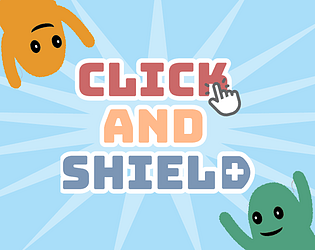
Click And Shield
A mini-game compilation about cybersecurity, built in two weeks for a national competition. Took 1st place at Universitas Brawijaya.
Case study · STAR
The story
Situation
Click And Shield was built for the 4C National Competition at Universitas Brawijaya. The team had two weeks to ship an engaging game on a topic that mattered. We picked cybersecurity, inspired by the pace of Dumb Ways to Die, and committed to a mini-game compilation with cutscenes between rounds. The core risk was managing many different mini-game logics inside one main system without crashes or messy code.
- National competition with a hard 14-day deadline
- Cybersecurity-themed mini-game compilation
- Multiple mini-game logics had to coexist cleanly in one runtime
Task
I held two roles, Team Lead and Lead Programmer. The technical responsibility was to design the architectural foundation that allowed mini-games to integrate quickly, ensure smooth transitions between levels and cutscenes, and coordinate the engineering tasks across the team so a 14-day target was actually reachable.
- Architectural foundation for fast mini-game integration
- Smooth transitions between mini-games and cutscenes
- Team coordination across the two-week deadline
Action
I designed the game architecture around the State Pattern, which let each mini-game and cutscene live as an independent module and minimised cross-bug risk. I built an automatic transition system that handled asset loading and game-state setup, so transitions only happened after the previous state had been validated. The Finite State Machine approach also gave each mini-game a clear contract to plug into.
- State Pattern as the backbone for every mini-game and cutscene
- Automatic transition system with validated state hand-off
- FSM contract per mini-game so the team could parallelise
- Daily coordination kept the 2-week schedule realistic
Result
We took first place in the Game Development category at the 4C National Competition 2024. The team delivered a stable game with strong technical performance under an extremely tight schedule. The judges' feedback specifically called out the educational quality and fun factor.
- 1st place, 4C National Competition 2024 (Game Development)
- Stable build despite the 14-day window
- State-pattern architecture became my reference for future jams
- Award
- 1st Place
- Event
- 4C National 2024
- Duration
- 2 weeks
Tech notes
- State Pattern as the architectural backbone, one state per mini-game and per cutscene
- Automatic transition system validates previous state before advancing
- Finite State Machine contracts gave each mini-game a clean integration point